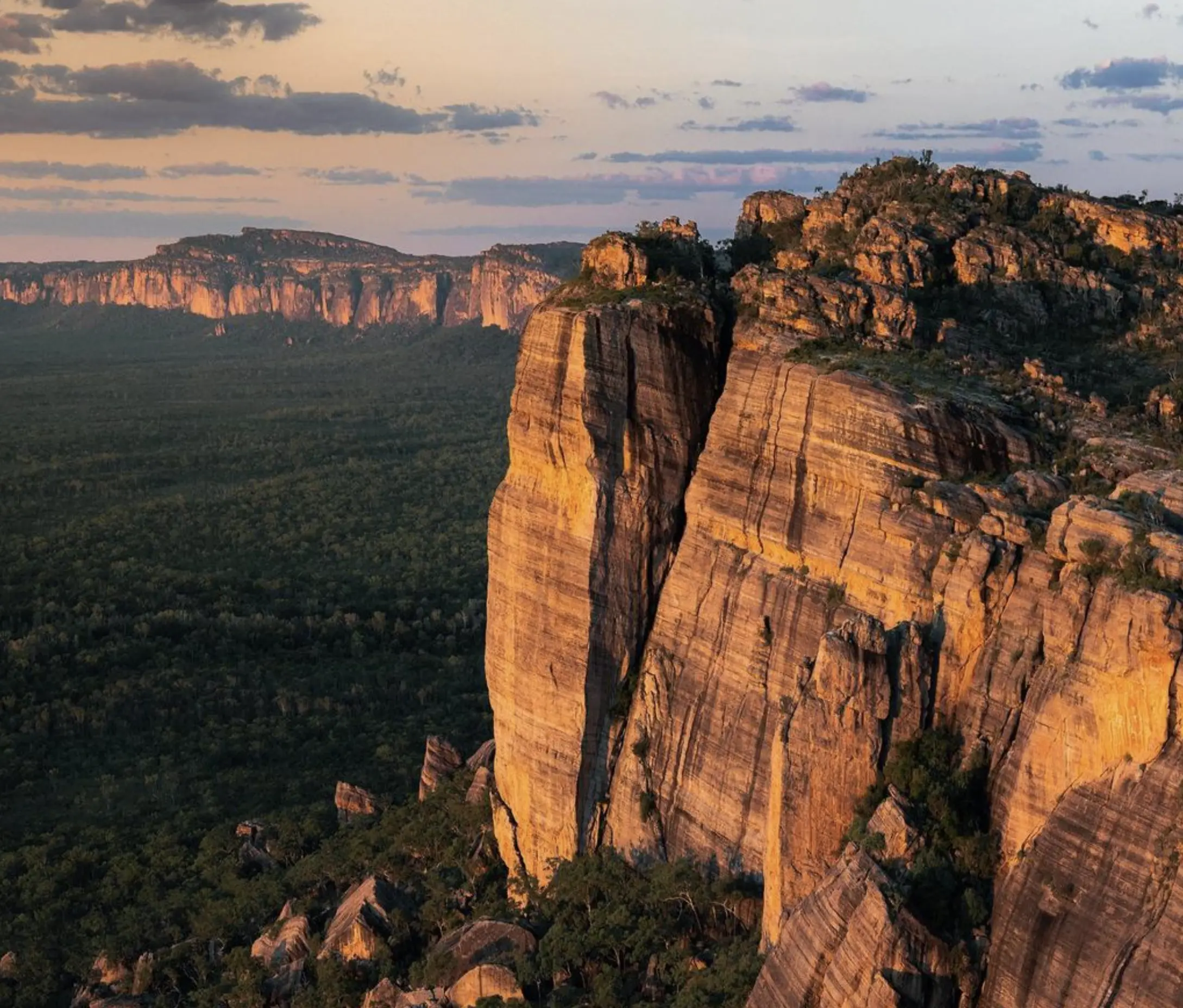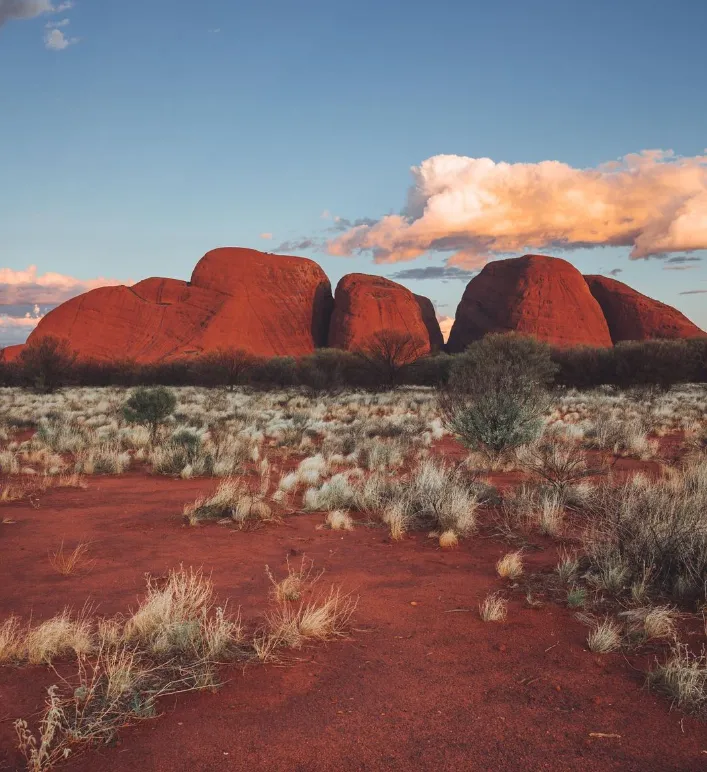
Australia’s Red Centre has two of the most famous rock formations in the world: Kata Tjuta and Uluru. These are mammoth landmarks located within Uluru-Kata Tjuta National Park which attracts visitors from different parts of the globe to witness their grandeur and soak in their deep cultural meaning. Kata Tjuta, with its ochre-colored rock domes and alien atmosphere, stands up admirably to Ayers Rock (also known as Uluru) that often gets all the attention. The focus of this article is: What are the differences between these two giant rock formations, and what distinguishes one from another? Their geological origins, spiritual meanings and experiences to anticipate when you get to Central Australia’s sacred sites are some things we shall delve into.
These ancient rocks are not only wonders but also cultural landscapes filled with stories from Dreamtime – a part of aboriginal history that had brought about existence into this world. This area was declared a national park by the Australian Government under the name Uluru-Kata Tjuta National Park because it has been registered by UNESCO as one of the world heritage sites. The park, which is managed by Parks Australia alongside Aboriginals living within the vicinity, signifies the long-standing bond between Indigenous nations and their lands.
Geology & Formation of Kata Tjuta & Uluru
Origins of Kata-Tjuta
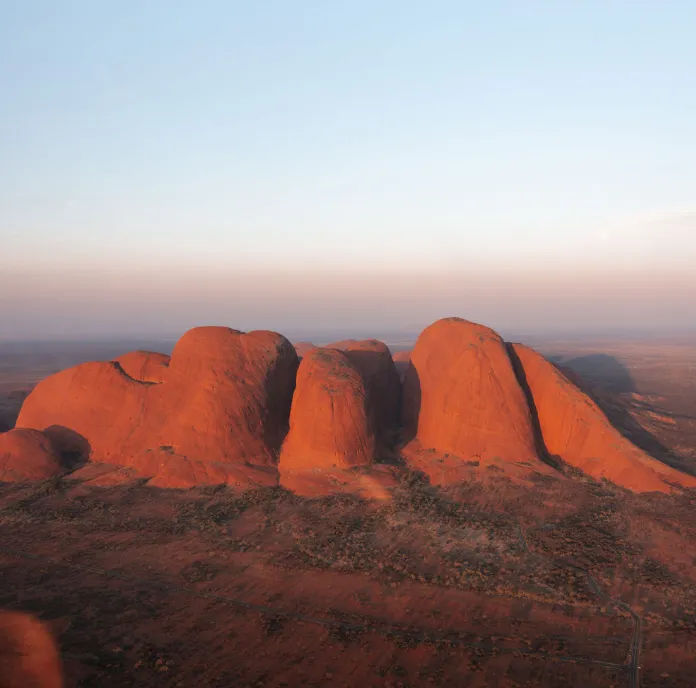
Kata-Tjuta or ‘Many Heads’ as it is called in Anangu language, is a set of 36 steep, conglomerate rock domes which rise abruptly from the flat desert floor. These red ochre colored rocks are a mix of several types including granite and basalt which formed about 600 million years ago. Different from Uluru which is an enormous lump of rock, Kata-Tjuta features many separate domes that make it one-of-a-kind geological feature.
Formation of Kata Tjuta started in Cambrian era when molten rock deep beneath earth’s crust began to rise up through cracks, breaking their way out. Over millions of years, erosion and weathering have shaped this rock into breathtaking forms observed today. Consequently, we now have a multitude of valleys and gorges that give each one its own distinctive identity.
Formation of Uluru

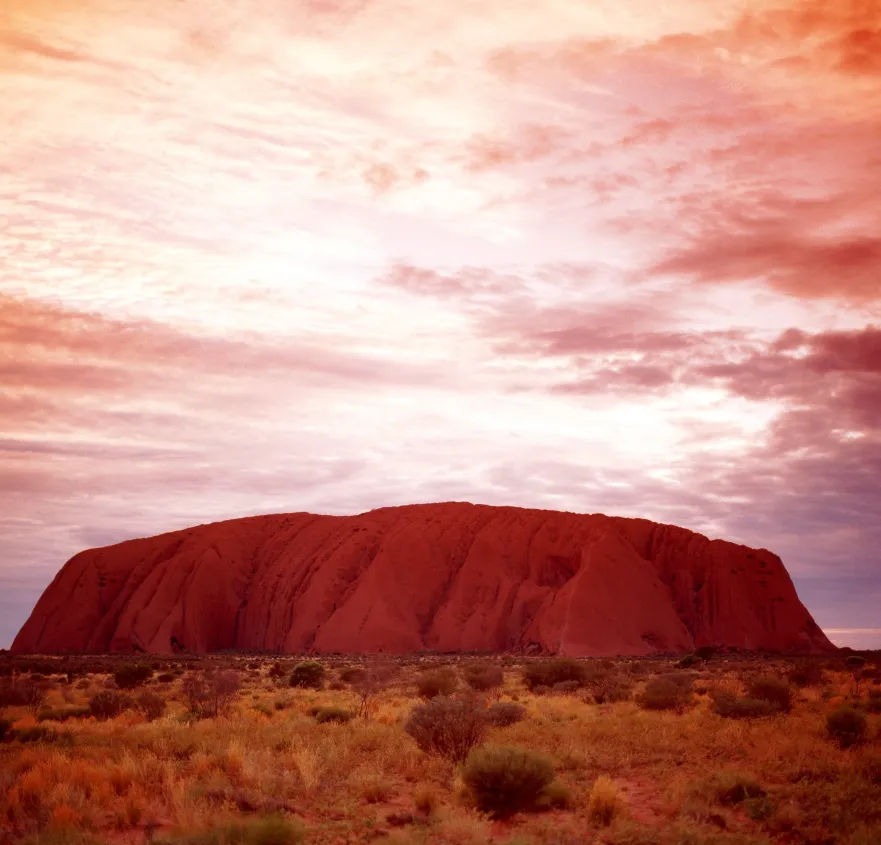
Uluru or Ayers Rock is probably the most recognized among all Australian rocky formations. At 348 metres high and with a circumference measuring 9.4 kilometres, Uluru is a single monolithic arkose sandstone formation. Feldspar-rich arkose sandstone is responsible for giving Uluru its unique reddish coloration that frequently changes during daytime depending on sun’s position.
Uluru, formed about 550 million years ago in the Neoproterozoic Period, was once part of a bigger range of mountains including Kata Tjuta that have been washed off by weathering. All that remains now is this huge rock formation jutted out of flat desert land. The uplift and folding of rock layers which were then eroded extensively created this iconic rock monolith.
Cultural Importance and Indigenous Connections
Dreamtime Stories about Kata Tjuta
Kata Tjuta carries great spiritual significance for the Anangu people, who are the traditional owners of the land. There are many Dreamtime stories connected to these rock domes explaining how they came into being and why they matter so much. One such story is about Wanambi, who is believed to be a giant snake king who lives at its peak during the dry season, only coming down when it’s wet season. The valleys and gorges of Kata Tjuta are considered as pathways he made when slithering through this region.
These sites are sacred; therefore, tourists are barred from entering them to protect their religious sanctity. However, the Anangu will share some information and stories with those going to Uluru-Kata Tjuta National Park because you cannot separate their connection with land.
Uluru’s Spiritual Importance
Uluru has similar if not more importance in Aboriginal culture than any other thing. It is regarded as a holy sanctuary where Dreamtime stories began from. Probably one famous story involves battle between Liru (poisonous snakes) and Kunia (carpet snakes). According to them, scorches on its surface result from epic struggles like butchering occurring at its surface since forever.
There are ancient aboriginal artworks all over Uluru’s cultural landscape showing what has happened here for thousands of years by indigenous people living here with pride. These paintings on rocks record significant aspects related to the spiritual perspectives of the Aboriginals, social ways and land connections. On guided tours through Uluru-Kata Tjuta National Park, some of these rock art sites are shown to tourists, who are led by Anangu elders, telling them about the stories and meaning behind those ancient artworks.
Visitor Experience and Activities
Exploring Kata Tjuta

Visiting Kata Tjuta is a different experience than visiting Uluru. The landscape at Kata Tjuta consists of larger rocks spread out over wider areas than those of Uluru. Different walking trails that provide unique scenes as well as encounters with the desert environment exist in the site. One of the most popular walks is the Valley of the Winds Walk, which is a 7.4-kilometer round trip that takes you through some incredible scenery. Walpa Gorge trail offers striking views of other domes around, and beyond these, Australian desert appears clearly on this trail.
The Valley of the Winds Walk should not be taken lightly because it includes some steep ascents and treacherous ground. Nevertheless, the hard work is well rewarded as from the top; you will be welcomed by an awesome sight. The Walpa Gorge Walk can be selected as a perfect choice for those who want to have a small walk that is less tiring. Within this 2.6-kilometre return journey, one can reach deep inside the gorge where there are towering conglomerate walls on each side.
Discovering Uluru
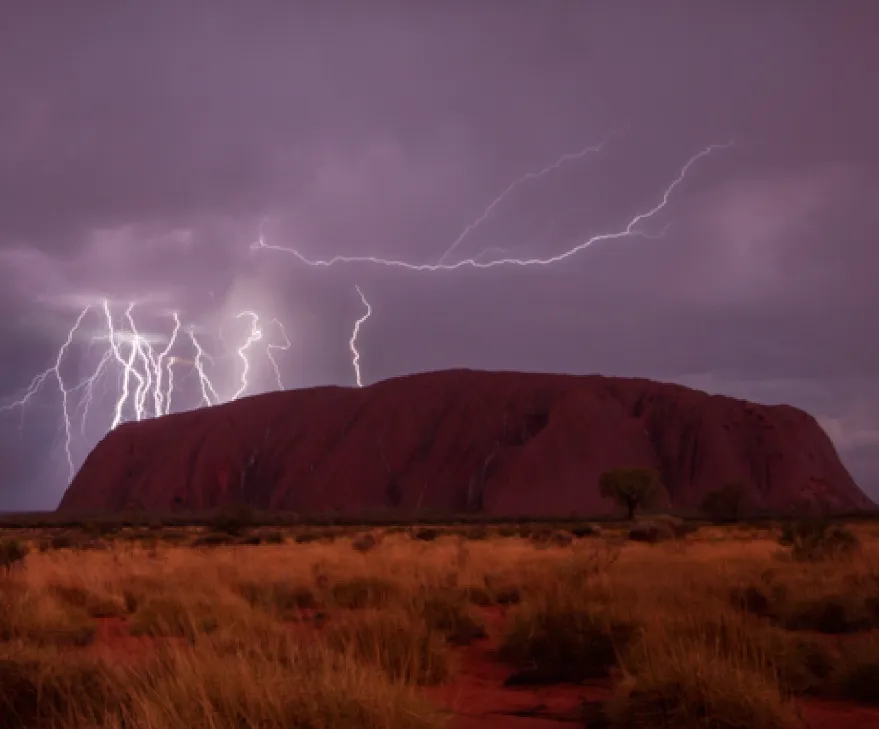
Uluru has more things to do in a smaller space, mostly around the rock formation itself. Among other things that one must do when touring around this place is Base Walk, which is about 10.6 kilometers long and goes around Uluru. This trip will enable you to come nearer towards the rock, thus observing its different features, which make it one of its kind, such as Kantju Gorge and ancient rock art sites.
Climbing Uluru was quite popular for many years until 2019, when the Australian government, together with the Anangu people, decided to close the climb so as to honour its spiritual significance among locals who own it by law. Nowadays, rather than climbing on it, visitors are encouraged to walk around Uluru, indicating respect towards Aboriginal cultures and giving them space for culture field trips as well.
Sunrise, Sunset and Beautiful Views
Australia’s Red Centre offers some of the most awe-inspiring sights especially at sunrise and sunset when the light does tricks on the landscape. Kata Tjuta and Uluru are two of the most famous landmarks in this arid region and their outlook changes remarkably depending on lighting conditions during the day.
Photography Opportunities at Kata Tjuta
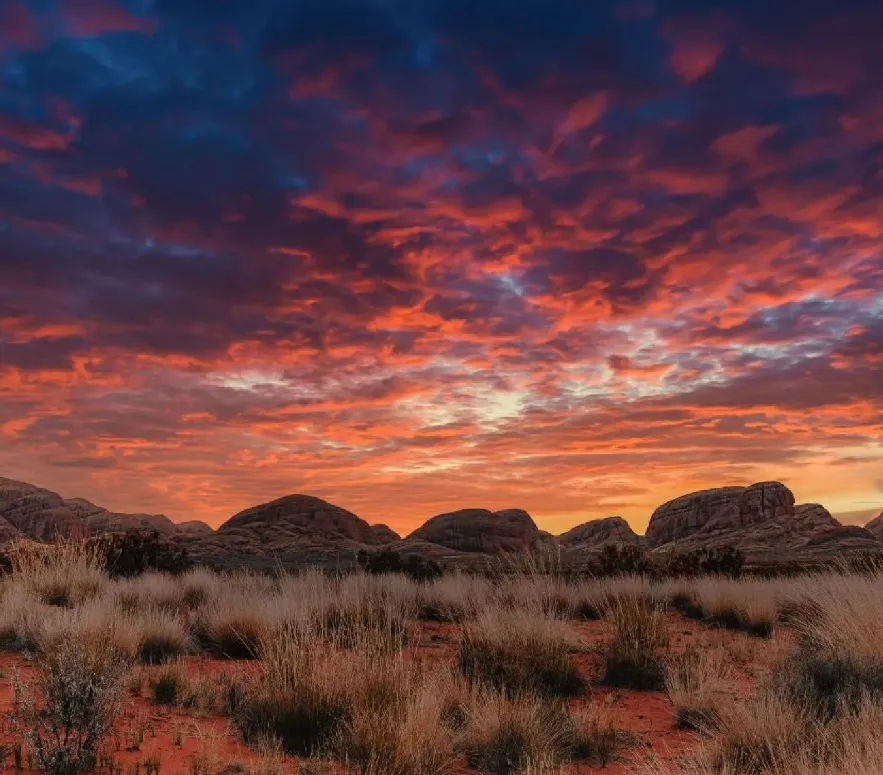
With its range of ochre-coloured rock domes, Kata Tjuta is a must for any photographer’s list. The best time to take pictures of these magnificent rock formations is during sunrise or sunset when the warm hues intensify rich textures and harsh lines that characterize domes.The walk through Walpa Gorge just one among many trails in this area offers striking views of the morning sky over them. The sunlight casts long shadows that bring out sharp contrasts between smooth faces and deep crevices.
Another great location for photography is the Valley of Winds, which is a more difficult track that affords panoramic views across the rock formations as well as surrounding desert landscapes. Large rocks seem to glow with flaming fire when there is always changeable daylight in these hours. A variety of colors streaking across their surfaces as they disappear beyond horizon gives an impression of magnificence within.
Changing Hues of Uluru
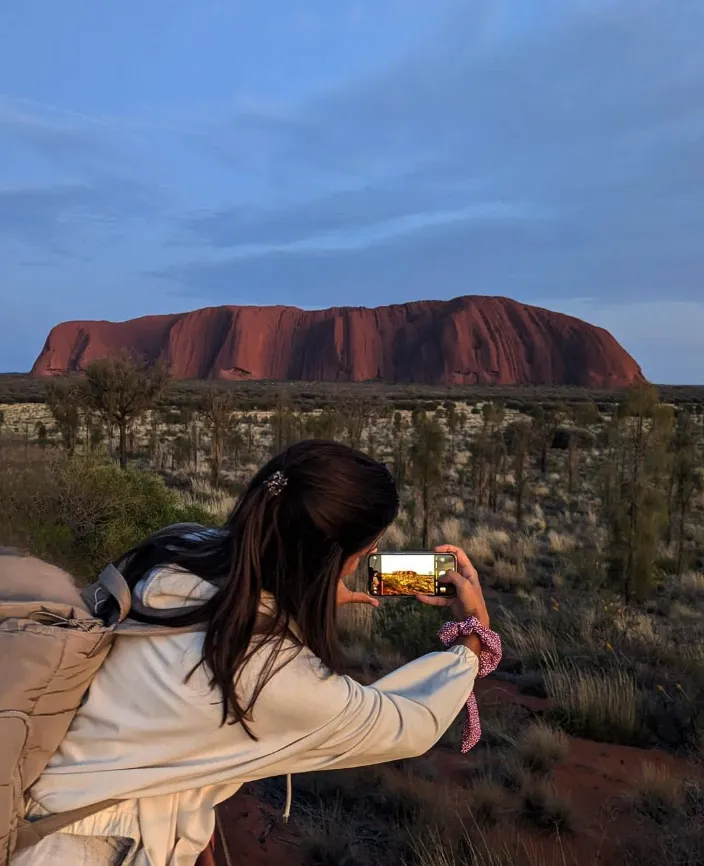
Uluru; also known as Ayers Rock has earned fame due to its incredible color shifts throughout each day. As it rises, from dark red it turns into bright orange before settling into deep pink shades finally ending with a soft lavender at dusk . This amazing display results from iron oxide covering on its surface which interacts with sunlight. It becomes unforgettable experience to see such transformations while visiting Uluru.
For photographers, Field Of Light installation provides an opportunity to see Ayers Rock differently than usual. Bruce Munro created this artwork by illuminating thousands lights scattered all over desert landscape thus creating quite contrasting image with natural colors of rock formation. The sunrise at Uluru is simply sublime, the first rays of sun on its surface giving it a magical halo that spreads all around.
Accessibility and Accommodation
Visiting Kata Tjuta and Uluru requires some planning to ensure a comfortable and convenient experience. Although these rocks in Central Australia are situated in remote areas, there are different options for getting there as well as accommodation choices available.
Getting to Kata Tjuta and Uluru
Both Kata Tjuta and Uluru can be accessed from the town of Alice Springs which is the main entrance into the Red Centre. The distance from Alice Springs to Uluru-Kata Tjuta National Park is about 450 kilometers (280 miles). The trip lasts about 4.5-5 hours and has good signposting as well as amenities along the way.
Alternatively, Wildlife Tours and other Kata Tjuṯa tour operators have guided tours from Alice Springs or Ayers Rock Resort. These mostly come with transportation, guiding services, and sometimes food provision, making them a convenient choice for those who do not want to drive. The Ayers Rock Airport (Connellan) is the nearest airport with flights to Sydney, Melbourne and Adelaide.
Staying Near the Rock Formations
Accommodation around Uluru and Kata Tjuta varies from luxury resorts to budget accommodations. Ayers Rock Resort is the major accommodation center in this part of the country being just a short distance away from Uluru. It gives different accommodation options like high-end hotels, self-contained apartments as well as camp sites. Besides that it has eateries, shops and cultural activities.
Within the national park, there are also several campsites and eco-lodges for those who prefer more immersive experiences. These getaways allow visitors to enjoy nature’s beauty without going far away, thus stunning views of desert landscapes right outside their doors. Booking ahead is recommended, particularly during peak seasons.
Best Time to Visit the Red Centre
In order to enjoy your visit to Red Centre, you will need to time yourself well owing to its extreme climate patterns. Typically, it is best to visit Kagaru Tjuta and Uluru during the cooler months between April and September.
Seasonal Highlights
In comparison with summer months when daily temperatures become much cooler ranging between 20°C (68°F) – 30°C (86°F), such conditions are ideal for outdoor activities such as walking trails exploration. The clear skies in combination with pleasant weather conditions also ensure excellent sightseeing opportunities especially for photography.
The spring and autumn months are particularly popular as they offer mild weather and fewer crowds compared to the peak summer season. During these periods wildflowers dotting this landscape show up brightly together with luxuriant greenery which creates magical contrast against an otherwise arid environment.
Weather Considerations
During summer, temperatures can get very high reaching above 40°C (104°F) in the Red Centre. This makes it difficult to hike or participate in outdoor activities. Those who decide to visit during the summer must remember not only about water but also sun protection and scheduling hiking trips for early morning till late afternoon.
In winter, nights can be freezing while daytime temperatures are generally pleasant. For mornings and evenings, warm clothing is necessary while daytimes are cool. Prior to your trip check weather forecasts accordingly in order to plan before you go on with your journey.
Conclusion: Choosing Between Kata Tjuta and Uluru
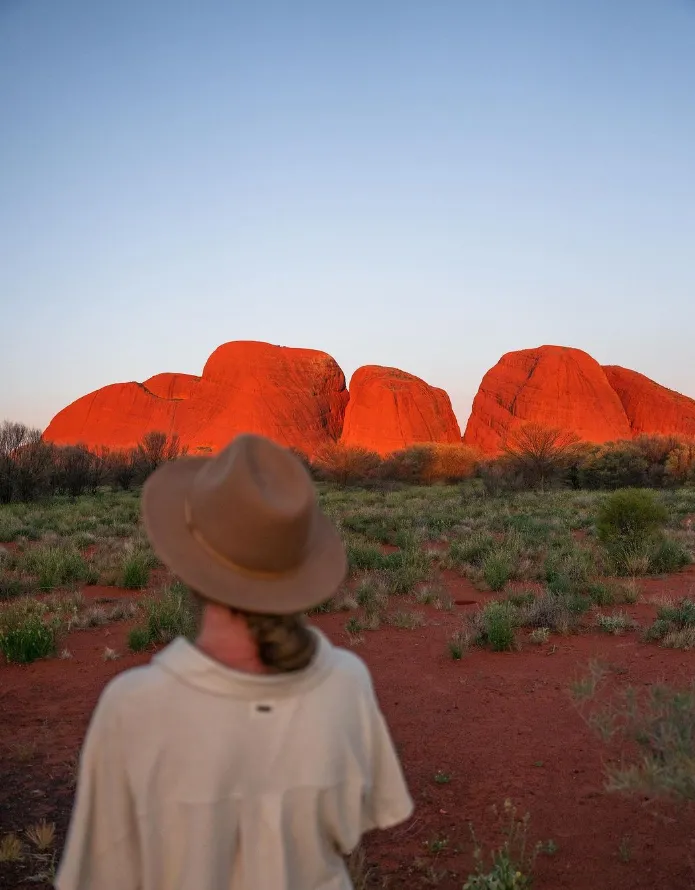
Your choice between Kata Tjuta and Uluru depends on what you expect from your trip through Australia’s Red Center. There are unique attractions and experiences at both rock formations, making each of them special in its own way. In fact, Kata Tjuta is known for its beautiful domes as well as challenging hikes, while Uluru is famous for its huge size that changes colours impressively over time. Whether it’s their cultural significance, scenic beauty, or outdoor adventures, both locations will give you a complete experience of Australia’s Red Center.
FAQs
What is the best time of year to visit Kata Tjuta and Uluru?
Best visiting times include the cooler months between April-September when outdoor activities such as sightseeing become easy because of manageable temperatures.
Can you climb Uluru?
No, scaling it is not allowed out of respect for its cultural value and conservation purposes. Visitors are able to walk around the base and take part in guided walks.
Are there any guided tours available for Kata Tjuta and Uluru?
Yes, a number of operators such as Wildlife tours have guided Uluru tours which include transport, meals and insights about culture.
What are the main walks at Kata Tjuta?
The Valley of the Winds and Walpa Gorge are common tracks that provide amazing panoramas over the rock domes and desert beyond.
How do I get from Alice Springs to Uluru?
You can either drive approximately 450 kilometres (280 miles) or fly to Ayers Rock Airport, which has regular flights from major cities.